August 28, 2026
The renewable energy market is expanding across solar power, wind energy, battery storage, grid technologies and other low-carbon solutions. As companies enter new markets...


If you have ever looked at your sales numbers and thought, “We are busy, but are we actually moving forward?”, there is a good chance that instinct is pointing to something real. Many teams generate leads, run campaigns, and follow up consistently, yet still struggle to see leads that are actually converting.
According to HubSpot, nearly 40% of sales teams say improving sales productivity is their biggest challenge, even more than generating leads. This is where things start to shift, because with most teams, the problem is not a lack of interest; it is what happens after the interest shows up. For example, a lead comes in, a follow-up gets delayed, a proposal sits in someone’s inbox, and slowly, the deal begins to lose shape. The activity is there, but the direction is not always clear, and somewhere along the way, teams start mixing up how they track interest versus how they manage deals. That is where the whole sales funnel vs sales pipeline confusion begins to creep in.
Working with a sales agency company in Chennai can often bring this gap into focus and start to show real value. A good agency is not just filling the top of the funnel and handing over names. It is helping shape the process behind those names, from lead qualification and routing to follow-up timing, stage tracking, and reporting. That is important because a strong sales system is not built on activity alone. It is built on how well each lead is handled once it enters the process.
Likewise, here is also when the difference between the funnel and the pipeline becomes easier to see. The funnel shows how buyers move from awareness to intent, while the pipeline shows how your team manages those opportunities once they are live. When both are defined properly, the work becomes more structured, the handoffs are cleaner, and it becomes much easier to spot where deals slow down or drop off.
A sales funnel shows how people move from first contact to action, such as booking a call, requesting a demo, or making a purchase. It usually moves through awareness, interest, consideration, intent, and decision. The labels may change, but the purpose is the same, which is to show how many leads enter and how many progress.
The funnel helps you understand where people drop off and why. For a business that depends on service-led selling, this is gold. It tells you whether your message is pulling people in or losing them halfway through. It also helps content, ads, and outreach teams shape their work around real buyer behaviour.
A sales pipeline is the working view of live deals, as it shows what your team is doing with leads once they enter the sales process. The sales pipeline focuses on the seller and tracks each deal through stages such as prospecting, qualification, discovery, proposal, negotiation, and closed won or lost. It shows where each deal stands and what needs attention.
A funnel asks questions like, “How are buyers behaving?” Whereas the pipeline asks, “What are we doing about it?” That contradiction is the heart of the difference between a sales funnel and a sales pipeline.
A funnel can be wide at the top and narrow at the bottom. A pipeline, meanwhile, is often managed like a list of active opportunities. It needs steady movement, and if deals sit too long in one stage, that simply means something is off. Maybe the lead is cold, maybe the next step was not clear, or possibly the team was waiting way too long to follow up. It is in these gaps that many businesses lose momentum, not because they lack leads, but because they let promising conversations go stale.

The sales funnel shows how buyers move, whereas the sales pipeline shows how deals move. The funnel is broader and helps explain buyer behaviour, but the pipeline is more practical and shows what the sales team is doing next.
They work together, but they are not the same. A weak funnel brings in the wrong leads and a weak pipeline lets good leads stall. That is also where a sales partner can help, by improving lead quality, follow-up, and the handoff between interest and action.
Here is a quick comparison table for further clarity:
| Aspect | Sales Funnel | Sales Pipeline |
| What it represents | The journey a buyer takes from first awareness to final decision | The journey a deal takes from first contact to closure |
| Focus | Buyer behaviour and intent | Sales team actions and deal management |
| Purpose | To understand how interest is created and nurtured | To track how opportunities are handled and converted |
| Scope | Broad and strategic, often used by marketing and sales together | Narrower and operational, mainly used by sales teams |
| Stages | Awareness, interest, consideration, intent, decision | Prospecting, qualification, discovery, proposal, negotiation, closure |
| The key question it answers | How are potential customers moving through the buying journey | What is happening to each deal right now |
| A common issue when weak | Attracting the wrong audience or losing interest early | Deals stalling, poor follow-ups, and low conversion despite good leads |
| Impact on revenue | Affects lead quality and volume entering the system | Affects how efficiently those leads turn into actual revenue |
| How services support it | Digital marketing, SEO, and lead generation build and shape the funnel | Lead qualification, follow-ups, CRM tracking, and sales processes strengthen the pipeline |
Sales pipeline metrics start doing the heavy lifting, but a few numbers matter here. Conversion rate shows how many leads move from one stage to the next, and a low rate often points to weak lead quality or a sales message that is not landing. Stage velocity measures how quickly deals progress through the pipeline. Some delay is normal, but if everything slows down, the process may need attention. Average deal size shows the value of each opportunity and helps shape forecasts and team targets. Win rate shows how many deals actually close, and pipeline coverage shows whether you have enough opportunities to meet future targets, or if your target is high and your pipeline is thin, which means trouble may be coming.
These are dashboard numbers that drive sales metrics and forecasting. They also help leaders estimate what may happen next month, next quarter, or even next season. This matters in India too, where buying cycles can shift with budgets, festivals, quarter ends, and market pressure.
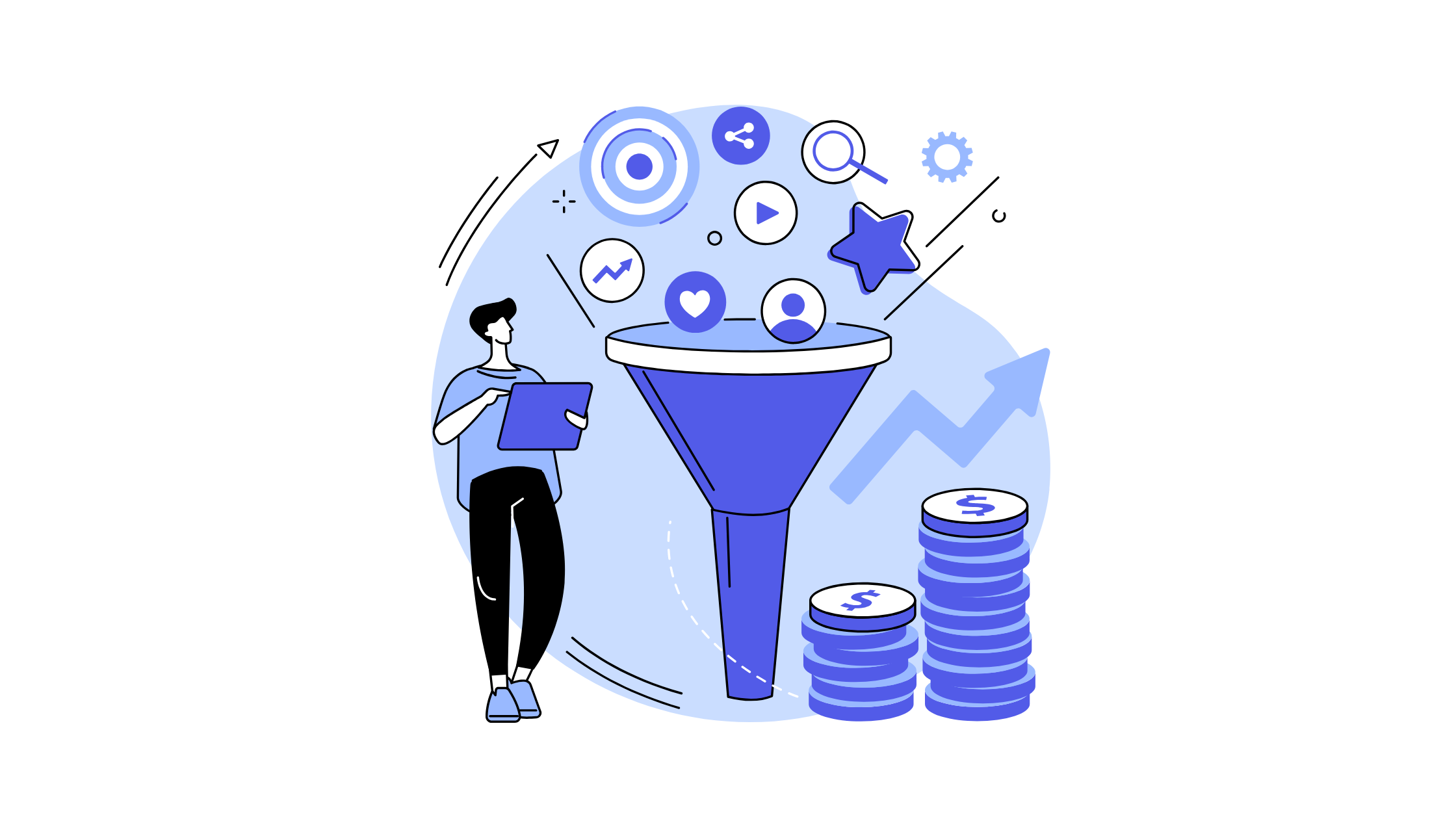
Forecasting gets shaky when the funnel and pipeline are mixed up. Let us say your marketing team brings in a lot of traffic and leads, and that’s great! But if the pipeline stages are not being tracked properly, you will not know which deals are serious and which are still testing the waters. On paper, things may look healthy, yet in reality, revenue may be thinner than expected.
That is why sales metrics and forecasting need both sides of the picture. The funnel tells you how much demand you are creating, and the pipeline tells you how much of that demand is turning into real business. However, if you only watch the funnel, you may celebrate too early, and if you only watch the pipeline, you may miss the bigger demand pattern, which is why both matter and both are supposed to be read together.
One common mistake is using the same stage names for everything without thinking about what they mean, which could be one reason your teams get confused. Another mistake is tracking too many numbers; it is good to have data, but more data does not always mean more clarity. Sometimes it just makes the team tired.
Some teams also forget that not every lead should stay in the pipeline forever. A lead that never responds should be removed, paused, or revisited later, or the forecast becomes less reliable. Follow-up delays also create problems, because the pipeline may look healthy on the surface, but slow responses can cause deals to slip through the cracks.
Start with the funnel if you want to improve how leads enter and move through the buying journey. Start with the pipeline if you want to improve how your team manages live deals and closes business. But do not separate them too hard, because the best sales teams treat them like two parts of the same engine. The funnel feeds the pipeline, while the pipeline turns interest into revenue.
For businesses wanting a joined-up view, working with a sales agency company can be the first smart thing to do. Such companies can offer lead generation, qualification, follow-up, and reporting, which should not feel like separate islands. They should connect cleanly, so the handoff from interest to action feels smooth.
Sales funnel vs sales pipeline is not a debate about which one wins or which one is superior; the key is knowing what each one is built to do. The funnel maps buyer behaviour and the pipeline tracks sales action. It helps create demand, while the pipeline turns that demand into revenue, and when both are managed well, sales metrics and forecasting become more reliable.
That is where the real shift happens, not just more leads or more activity, but better control, clearer visibility, and a system that actually holds together.
If your current setup feels busy but inconsistent, it may be worth reworking how your funnel and pipeline connect.
We at DealsInsight work with businesses to streamline lead generation, structure pipelines, and improve conversion flow across stages. You can explore more on our website and see how a more organised approach to sales can change the outcome, or connect with our experts today.
The renewable energy market is expanding across solar power, wind energy, battery storage, grid technologies and other low-carbon solutions. As companies enter new markets...
The green energy boom is undeniably real, but for many clean energy firms, the day-to-day reality is surprisingly stressful. Your calendar is packed. Your...
Sales prospecting has changed, but not in the dramatic way people sometimes suggest. The tools are different, the buyer journey is more crowded, and...