
August 28, 2026
The renewable energy market is expanding across solar power, wind energy, battery storage, grid technologies and other low-carbon solutions. As companies enter new markets...


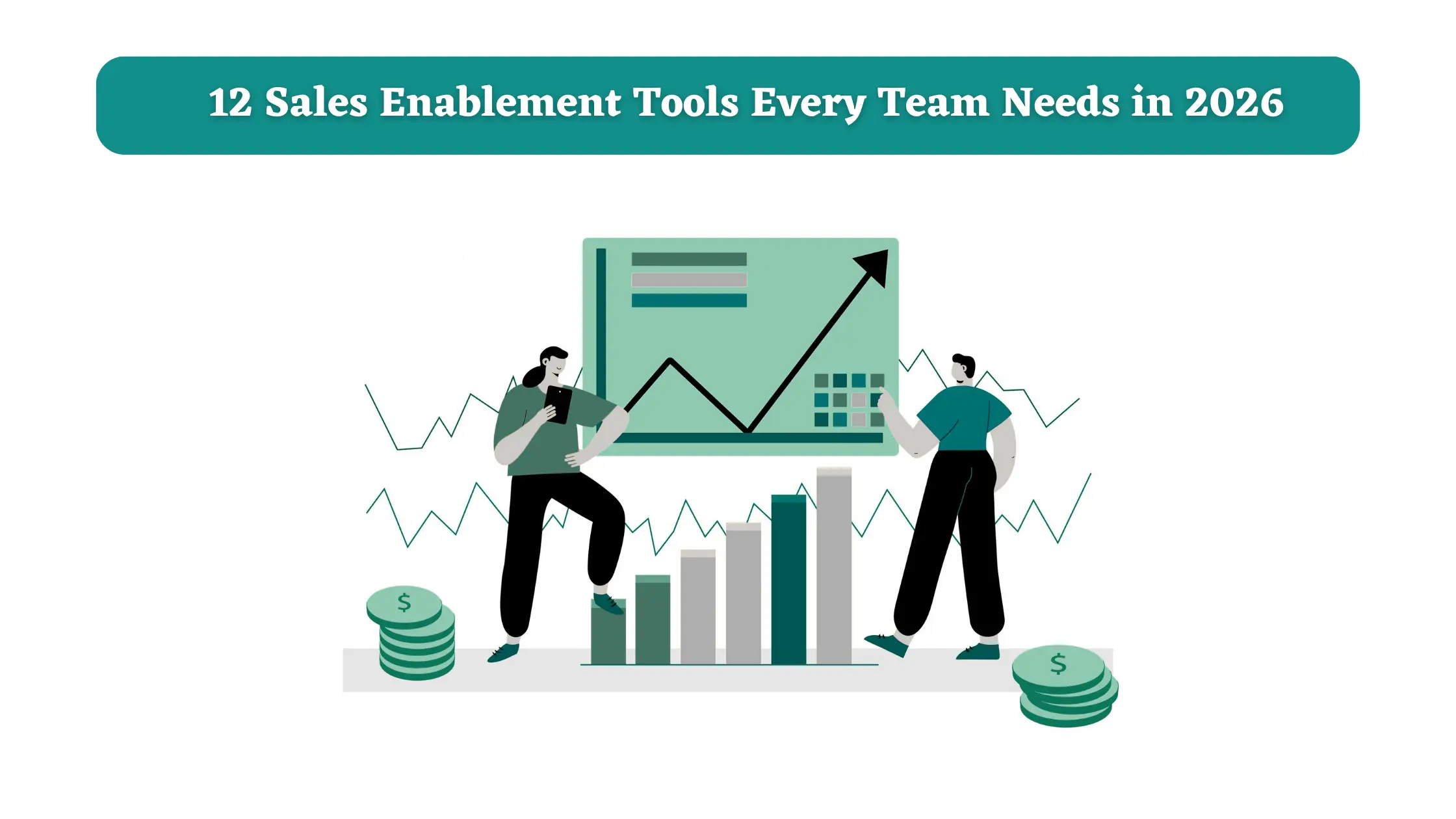
Sales teams that win in 2026 treat sales enablement tools as the scaffolding for predictable revenue, not optional add-ons.
Modern sellers rely on platforms that keep records clean for dependable pipeline management, automate repetitive outreach, and surface measurable outcomes through performance and KPI tracking.
When prospecting, engagement, content and analytics form a single, reliable flow, then the CRM stays as the single source of truth, and teams stop guessing and start delivering repeatable outcomes.
Organizations with a formal enablement programme report materially better results, including roughly 49% higher win rates on forecasted deals, which is why the right stack and the right adoption plan matter.
Below are the tools which explain the bottleneck they solve, what they measure, along with a short adoption tip so the technology actually gets used. Let’s get started.
A CRM is the backbone and records everything, so you can trust the number. Salesforce is the example most teams benchmark against because it centralises account and activity data, automates workflows, and provides the audit trail RevOps needs to trust forecast signals.
Use CRM-driven required fields, engagement timers, and lightweight sales automation to stop “ghost” deals and make pipeline hygiene non-negotiable. Measure the % of deals with up-to-date next steps and forecast accuracy over time. The adoption tip, we’ll try to enforce a few mandatory fields and show reps how fast it helps them close deals, and not just how it helps reporting.
When sellers need a simple, unified platform that blends marketing and sales, HubSpot shines for smaller or fast-moving teams.
It turns inbound signals into qualified records, tracks engagement automatically, and offers built-in engagement tools so sellers don’t switch context. Use it when you want speed-to-value and minimal middleware. Measure lead-to-opportunity conversion and time from inbound touch to first meeting. To adopt it quickly, start with HubSpot templates and sequences so reps get immediate time back.
Gong records and analyses customer conversations to turn talk into reliable signals. Conversation intelligence exposes which messages, objections, and moments correlate with progress and which don’t.
That lets managers coach to outcomes (not activity) and improves forecast truth by surfacing risk indicators from real interactions. Measure the forecast lift after coaching cycles and % of deals with conversation-validated next steps. To adopt it, integrate call capture with your CRM and run short, evidence-based coaching sessions anchored in Gong clips.

Outreach automates multichannel outreach cadences while keeping the human in the loop. It reduces manual follow-up, personalises at scale, and frees reps to focus on conversations that matter.
That means more touches that are smart (not noisy) and a faster pipeline build. Measure the qualified meetings per rep and sequence-to-opportunity conversion, and map a small set of winning cadences to buyer personas to adopt them. Also, test, and then roll out, don’t simply publish 50 cadences on day one.
ZoomInfo supplies the data that fuels prospecting, such as verified contacts, firmographic signals and buying intent. Good prospect data shortens research time and increases message relevance.
Use it to enrich CRM records and to power targeted account lists for outbound and ABM. Data enrichment rate (contacts added/updated) and response rate lift after enrichment are the perfect metrics to measure. For easy adoption, automate enrichment jobs nightly and teach reps a fast “data audit” habit before major outbound pushes.
Clari is built to orchestrate revenue operations like unify signals, inspect pipelines, and automate the boring work of reconciliation so leaders can act earlier. Revenue orchestration platforms translate disparate signals into recommended actions, i.e., where to apply sales coverage and when to push for an executive intervention.
Measure forecast accuracy, deal slippage rate, and time to detect at-risk deals, and for adoption, start with a RevOps pilot that focuses on one business unit and one measurable KPI (forecast accuracy) before scaling.
Highspot delivers content, playbooks and AI guidance at the moment of need. The right content, surfaced contextually inside a rep’s workflow, turns collateral into outcomes like better discovery, better demos, and fewer follow-ups.
Content engagement correlated to deal stage progression and win rates by playbook can be measured here. An adoption tip is to try nominating a content curator in each GTM pod who owns a living playbook and a quarterly refresh cadence.
Seismic focuses on personalised content delivery and learning at scale. Where Highspot helps reps find content, Seismic adds deep personalisation for buyer interactions and learning modules that tie behaviour to outcomes. Use it when you need scalable content governance plus measured seller enablement.
Measure the usage of personalised assets, time-to-first-use for new collateral, and impact on close velocity and for adoption bundle content and short micro-learning into a single workflow so reps both use and understand the asset’s purpose.
Mindtickle treats readiness as continuous, not an onboarding event. It combines micro-learning, role plays, and readiness scoring so managers can see who’s ready to sell and why. That reduces ramp time and keeps behaviours aligned to what wins.
Ramp time, readiness index trends, and performance delta after targeted coaching can be measured. As an adoption tip try to replace one long onboarding course with a 90-day readiness plan that includes weekly, measurable checkpoints.
Apollo mixes prospect data with engagement tools and sales automation in a single place, ideal for lean teams that want powerful outbound without a dozen integrations. It helps teams test messaging quickly and keep enrichment and outreach in sync. Measure the outbound funnel velocity and lead conversion from lists built in Apollo. To adopt it easily create canonical prospect lists and share them via synced folders or CRM tags to avoid duplication.
Lusha helps reps find verified phone numbers and emails fast, cutting research time and improving outreach relevance. It syncs with CRMs and sales engagement platforms to keep records current. Measure contact accuracy, connection rate and response lift after enrichment and for adoption, ask reps to validate contacts before campaigns and automate CRM syncs to protect pipeline hygiene.
ContactOut specialises in pulling verified emails and phone numbers from professional networks like LinkedIn, helping recruiters and outbound teams reach hard-to-find prospects. Use it to build precise lists and enrich CRM records and track qualified contacts per campaign, response rates and verified-contact CRM additions. To adopt train teams to extract lists from searches and sync them into existing workflows.

Each platform solves a specific bottleneck, and the practical value appears when they feed one another by prospecting intelligence that enriches CRM records, engagement platforms act on enriched records, content platforms supply the right collateral inside sales motions, revenue intelligence highlights where leaders must step in, and readiness systems reinforce the behaviours that produce results.
Link them with a small set of canonical integrations (CRM → engagement → content → revenue intelligence → readiness) and measure closed-loop impact for each link: does better data improve outreach response? Does coaching informed by conversation intelligence improve win rate? Those are the questions that prove ROI.
If you are still not sure, book a demo today with DealsInsight and see how better conversation insights can help your team close more deals with confidence. This is because understanding what actually moves deals forward is key and makes the difference between activity and outcomes. With a leading B2B Inside Sales Outsourcing Company in Chennai, you can identify the right tool suitable for your organization to analyse real customer interactions, identify patterns that influence decisions, and coach teams with data that improves win rates.
For more information and to explore tools we may not have listed here, speak to the DealsInsight team today.
The renewable energy market is expanding across solar power, wind energy, battery storage, grid technologies and other low-carbon solutions. As companies enter new markets...

The green energy boom is undeniably real, but for many clean energy firms, the day-to-day reality is surprisingly stressful. Your calendar is packed. Your...
Sales prospecting has changed, but not in the dramatic way people sometimes suggest. The tools are different, the buyer journey is more crowded, and...